How Long Does Cosmetic-Grade Beef Tallow Keep?
The short answer. No US rule sets a shelf life for cosmetic tallow. It keeps as long as its oxidation stays inside the specification, and heat, light, air and the antioxidant decide how long that is.
ON THIS PAGE · 4 MIN
Why tallow does not have one number
FDA is direct about this: there are no US laws or regulations that require cosmetics to have specific shelf lives or expiration dates, and FDA considers determining a product's shelf life to be part of the manufacturer's responsibility. So any figure you are quoted for bulk tallow is a claim made by the supplier, and it is only as good as the test behind it.
What ends a tallow's useful life is almost always oxidation, the slow reaction of the fat with oxygen that produces the stale, crayon-like smell customers call rancid. FDA notes that temperature changes and exposure to sunlight and air can cause changes in color and texture and can make products smell. Those three are the levers. The same drum stored cool, dark and sealed will stay inside its specification far longer than one opened weekly in a warm stockroom. One number suppliers often quote as proof of stability cannot, by its own standard, tell you how long the tallow keeps, and we come back to it below.
What to do
- Ask what the stated shelf life is based on: real-time storage data at a stated temperature, or an estimate. Ask for the storage conditions it assumes.
- Store tallow cool, dark and sealed. Keep it away from windows, ovens and the warm side of the warehouse.
- Keep containers full and closed. Air in the headspace is oxygen the fat can react with, so decant into smaller sealed containers rather than reopening one large drum.
- Use lots first in, first out, and write the lot number and the date opened on every container.
- Retest an older lot before you commit it to a batch, and compare the result with the limit on its certificate of analysis, not with how it smells to you that day.
The stability number that is not a shelf life
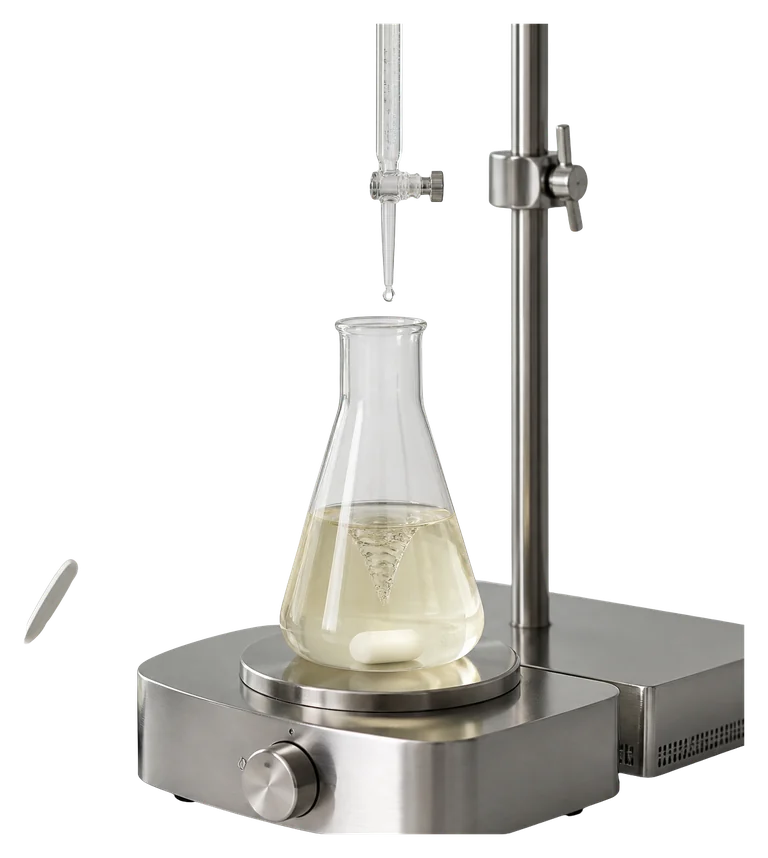
An accelerated test ranks fats. Only time on the shelf dates them. The common laboratory test for oxidative stability in fats is ISO 6886, the accelerated oxidation test. It runs a sample at high temperature with a flow of air and measures how the fat holds up under those extreme conditions. It is fast and useful, which is why suppliers like to quote it.
The catch is written into the standard itself. Its scope says the method allows antioxidant efficacy to be compared but does not allow stability at ambient temperature to be judged. A sample that holds out well in a hot, aerated test cell has shown that it is more stable than a sample that does not. It has not shown how many months it will last in a cool stockroom. A supplier who turns an ISO 6886 result straight into "24 months shelf life" has made a leap the method does not support.
That does not make the test worthless. It is a good way to compare two lots, two suppliers or two antioxidant levels against each other. It is simply a ranking tool, not a calendar. The calendar comes from real-time storage: retained samples held at the stated condition and tested at intervals against the specification.
What a sound shelf life claim looks like
A defensible shelf life for bulk tallow names three things: the storage condition, the test used to judge it and the limit that ends it. "Within specification for the stated period when stored sealed, cool and dark, judged by peroxide value against the COA limit" is a claim a cosmetic chemist can check. "Long shelf life" is not.
The same logic carries into the finished balm, where the formula, the antioxidant and the pack all change the answer. Our guide to tallow oxidation and stability covers the tests in more depth, and our guide to buying bulk cosmetic tallow covers what to put in the purchase specification. If you want to know what a product built on a stable tallow would cost, the Formulation Buddy gives an estimate after a short form.
Questions founders ask
Does cosmetic tallow need an expiration date in the US?
No US law or regulation requires cosmetics to carry an expiration date. FDA treats determining a product's shelf life as part of the manufacturer's responsibility for its safety.
Should I store bulk tallow in the fridge?
Cool, dark and sealed is what matters, because heat, light and air drive the changes in smell and color. A stable cool room is usually enough; repeated warming and chilling is worse than either.
Can an accelerated oxidation result tell me my tallow's shelf life?
No. The ISO 6886 accelerated oxidation test is run under extreme conditions and its own scope says it is not for judging stability at ambient temperature. It is good for comparing fats and antioxidants.
Evidence
Primary sources this note rests on. Where a number appears above, it comes from one of these.
- Shelf Life and Expiration Dating of Cosmetics · U.S. Food and Drug Administration, 2022
- ISO 6886:2016 Animal and vegetable fats and oils, Determination of oxidative stability (accelerated oxidation test) · International Organization for Standardization, 2016
Want to see what your own tallow product would look like?
Pick a product, size, oil and scent. The Formulation Buddy gives you a theoretical starting formula, a draft US ingredient list and an estimate in about two minutes.